 Fingertip Ritual – Liao Xuan Zhen Solo Exhibition
Post date:2026-05-28
Updates:2026-05-28
266
- Event Time
- 2026-06-13~2026-08-2310:30-17:30
- Organizer
- Chew's Culture Foundation, Hong-Gah Museum
- Event Location
- 11F., No. 166, Daye Rd.(Hong-Gah Museum), Beitou Dist., Taipei City Taiwan, R.O.C
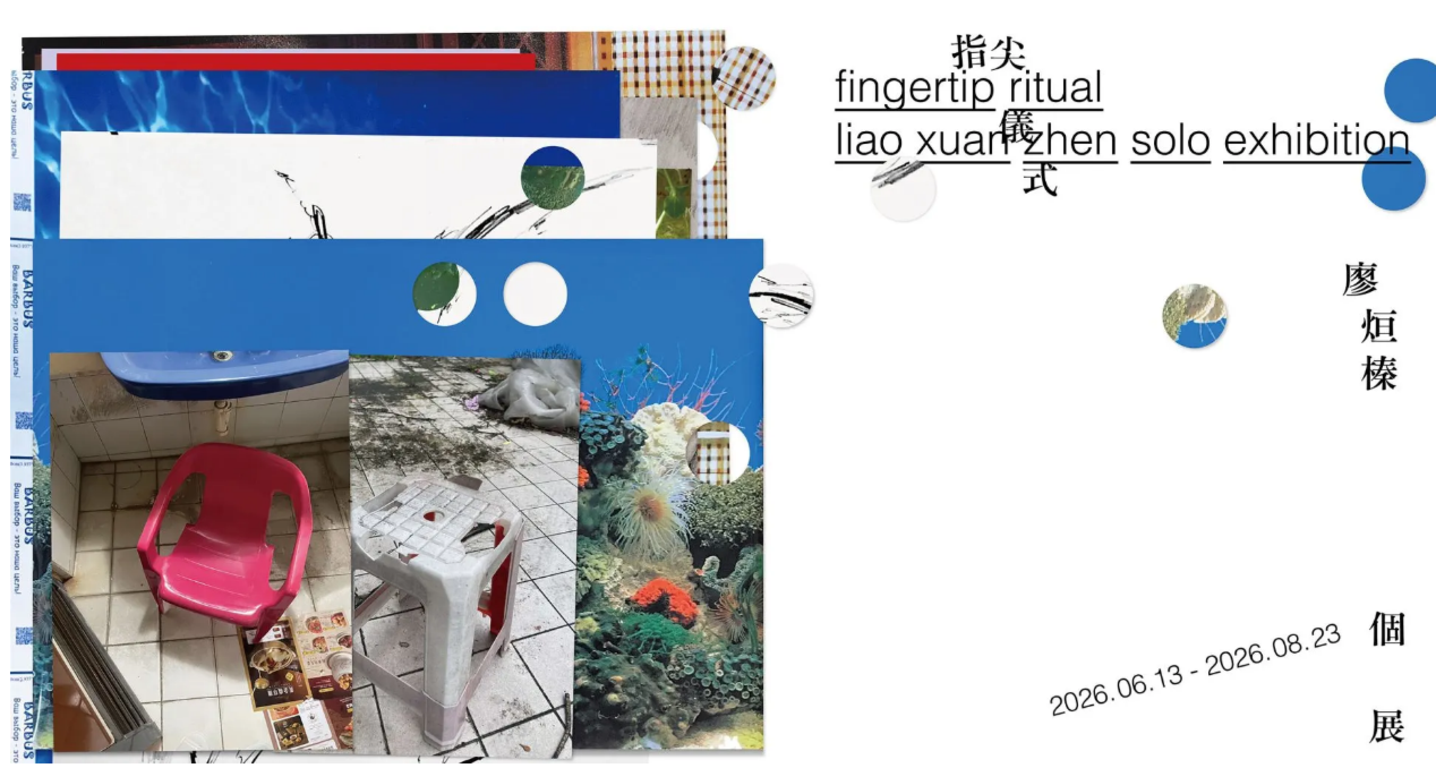
Hong-Gah Museum is honored to present Fingertip Ritual, a research-based art project by Liao Xuan-Zhen, developed from the environmental characteristics of Beitou. Born in the Houjin industrial district of Kaohsiung, Liao has lived in Beitou for many years since moving north for her university studies. The project originated from an accidental olfactory experience: the artist realized that the industrial sulfuric odor she had grown accustomed to in her youth bore a striking resemblance to the scent of Beitou's hot spring area. Though invisible, smell is deeply inscribed in bodily memory, prompting an inquiry that connects two distinct places with her personal life trajectory.
Beitou is renowned for its natural sulfur hot springs. During winter, walking through the steaming landscape, the faint ''rotten egg'' scent of sulfur evokes in the artist a sense of both familiarity and dissonance. This smell recalls her memories of the Houjin Creek, whose waters also carry a sulfuric odor—one that intensifies near drainage convergence points. Such olfactory impressions formed her earliest awareness of river pollution. Flowing through a densely industrialized zone of refineries and residential areas, the river's contaminated waters emit a smell derived from hydrogen sulfide, a substance found in petroleum pollutants, natural sulfur deposits, and the decomposition of organic matter.
For Liao, this odor becomes a metaphor for an era—one in which healing and extinction coexist—and prompts a reconsideration of the blurred boundaries between nature and human-made, medicine and poison. The project unfolds along two axes. The first involves field collection in both Houjin and Beitou to construct aquatic landscapes, with the aquarium relocated into various environments. No longer confined as static indoor displays, these tanks are transformed into mobile ecological carriers—akin to vessels or arks bearing fragments of nature. The second axis develops a scent installation responding to the olfactory experiences of both places. Drawing on Beitou's volcanic landscape, sulfur-scented paraffin is produced on site within the museum, forming a visual image resembling liquidic, flowing lava. During the exhibition, the wax will slowly melt under the heat of the warming lamp. In addition, the project includes two video works that compile the artist’s field research processes and practices across the two locations. Beginning with scent as its point of departure, Fingertip Ritual connects Houjin and Beitou, further exploring how toxic atmospheres are internalized into everyday life and persist within land, vegetation, and the human body.
Liao Xuan-Zhen was born in Kaohsiung and is currently based in Beitou. During her studies in the Department of Fine Arts at Taipei National University of the Arts, she was influenced by the Sunflower Movement and collaborated with three peers on the experimental film Time Splits in the River, marking the beginning of her engagement with generational dialogue and historical narrative. She has since maintained a collaborative practice with artist Huang I-Chieh, developing projects such as Paper Architecture, Calmness, Save As, Tell Yourself to the Ochre, Swallow Cave, and The Parthenon. Her work focuses on collective consciousness and historical memory, employing object-based installations and performative actions to invite audiences into processes of shared memory-making and translation. Fingertip Ritual is Liao's first solo exhibition, developed over two years. It reflects on her formative environment while connecting to her current living context, extending her long-standing concern with public consciousness and deepening her exploration of the dialectical relationship between the human-made and the natural.
Beitou is renowned for its natural sulfur hot springs. During winter, walking through the steaming landscape, the faint ''rotten egg'' scent of sulfur evokes in the artist a sense of both familiarity and dissonance. This smell recalls her memories of the Houjin Creek, whose waters also carry a sulfuric odor—one that intensifies near drainage convergence points. Such olfactory impressions formed her earliest awareness of river pollution. Flowing through a densely industrialized zone of refineries and residential areas, the river's contaminated waters emit a smell derived from hydrogen sulfide, a substance found in petroleum pollutants, natural sulfur deposits, and the decomposition of organic matter.
For Liao, this odor becomes a metaphor for an era—one in which healing and extinction coexist—and prompts a reconsideration of the blurred boundaries between nature and human-made, medicine and poison. The project unfolds along two axes. The first involves field collection in both Houjin and Beitou to construct aquatic landscapes, with the aquarium relocated into various environments. No longer confined as static indoor displays, these tanks are transformed into mobile ecological carriers—akin to vessels or arks bearing fragments of nature. The second axis develops a scent installation responding to the olfactory experiences of both places. Drawing on Beitou's volcanic landscape, sulfur-scented paraffin is produced on site within the museum, forming a visual image resembling liquidic, flowing lava. During the exhibition, the wax will slowly melt under the heat of the warming lamp. In addition, the project includes two video works that compile the artist’s field research processes and practices across the two locations. Beginning with scent as its point of departure, Fingertip Ritual connects Houjin and Beitou, further exploring how toxic atmospheres are internalized into everyday life and persist within land, vegetation, and the human body.
Liao Xuan-Zhen was born in Kaohsiung and is currently based in Beitou. During her studies in the Department of Fine Arts at Taipei National University of the Arts, she was influenced by the Sunflower Movement and collaborated with three peers on the experimental film Time Splits in the River, marking the beginning of her engagement with generational dialogue and historical narrative. She has since maintained a collaborative practice with artist Huang I-Chieh, developing projects such as Paper Architecture, Calmness, Save As, Tell Yourself to the Ochre, Swallow Cave, and The Parthenon. Her work focuses on collective consciousness and historical memory, employing object-based installations and performative actions to invite audiences into processes of shared memory-making and translation. Fingertip Ritual is Liao's first solo exhibition, developed over two years. It reflects on her formative environment while connecting to her current living context, extending her long-standing concern with public consciousness and deepening her exploration of the dialectical relationship between the human-made and the natural.