 August Night Sky Spectacular: Meteor Showers, Planetary Conjunction, and a Magical Variable Star Brightening by 10,000 Times!
Post date:2025-08-19
Updates:2025-08-20
Press bureau:Taipei City Government
1206
Get ready for a cosmic carnival this August! The night sky will host dazzling events, headlined by the Perseid meteor shower, peaking on Tuesday, August 12. Additional celestial highlights include a Venus–Jupiter conjunction, the Moon approaching the Pleiades, Mercury reaching greatest western elongation, and the remarkable brightening of the variable star Chi Cygni, whose brightness increases by more than 10,000 times!
The Perseid meteor shower, one of the year's three major meteor showers, is renowned for its swift meteors and occasional bright fireballs. This year, during its peak on August 12, the zenithal hourly rate (ZHR) is predicted to reach about 100 meteors per hour, with around 60 meteors per hour visible under typical viewing conditions. Despite interference from bright moonlight this year, the occasional bright fireballs are still worth the watch. Taipei Astronomical Museum recommends choosing a location with a wide-open view away from the Moon for optimal naked-eye viewing.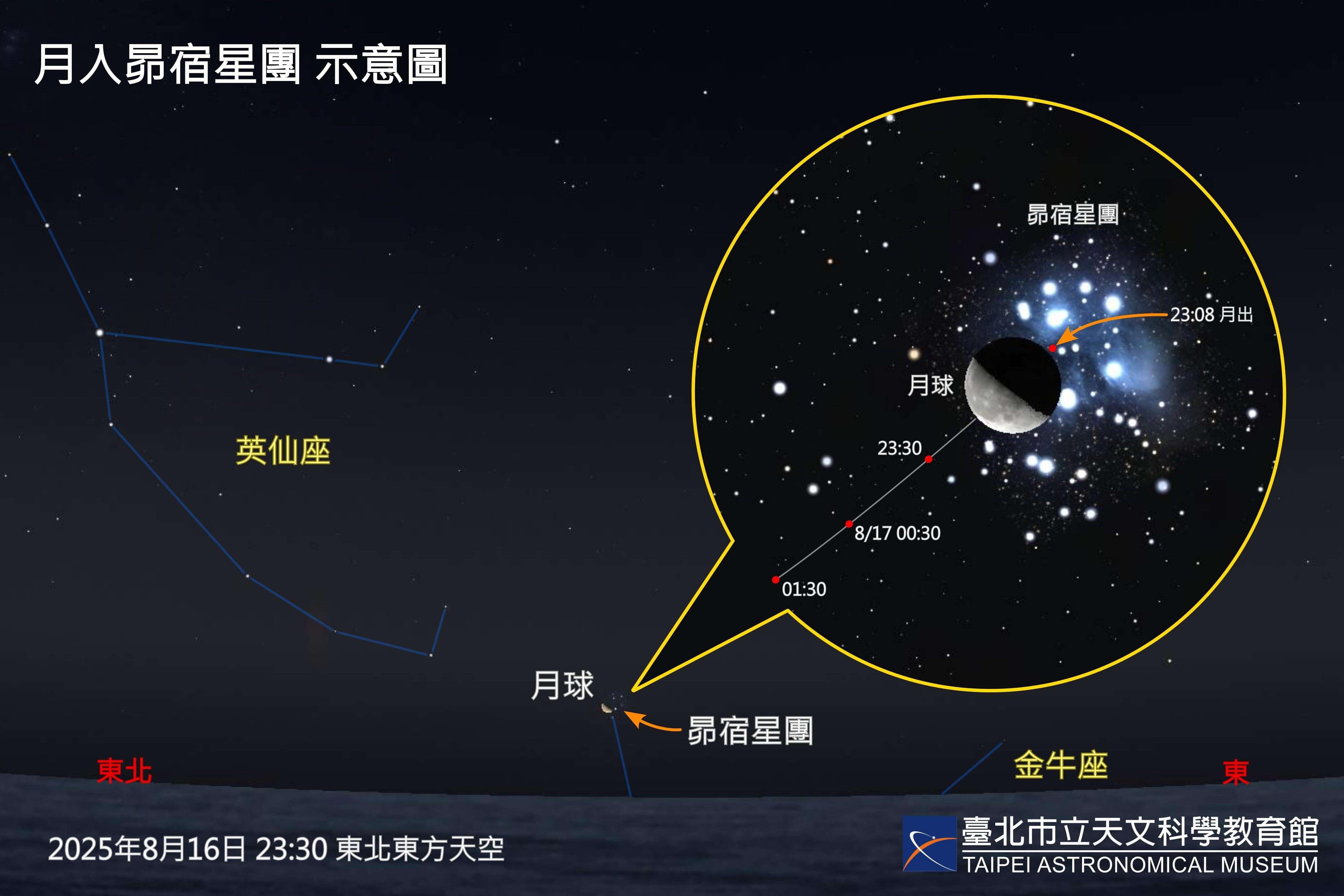 On Wednesday, August 13, around 3:00 a.m., Venus and Jupiter will stage a close conjunction in the eastern sky, separated by just about 1 degree—their closest approach of the year. With Venus shining at magnitude –4.0 and Jupiter at magnitude –1.9, their simultaneous rise before dawn will be a romantic and spectacular scene.
Late on Saturday, August 16, the last quarter Moon will pass near the Pleiades star cluster—also known as the "jewel box of the night sky". A pair of binoculars will offer a charming view of the Moon and the cluster's densely packed stars in the same field of view. On Tuesday, August 19, Mercury reaches greatest western elongation, placing it 18.6 degrees away from the Sun. This marks the best time to observe Mercury this season. Just before dawn, you'll be able to spot bright Mercury, and with binoculars, also catch the nearby Praesepe (Beehive Cluster) to its left.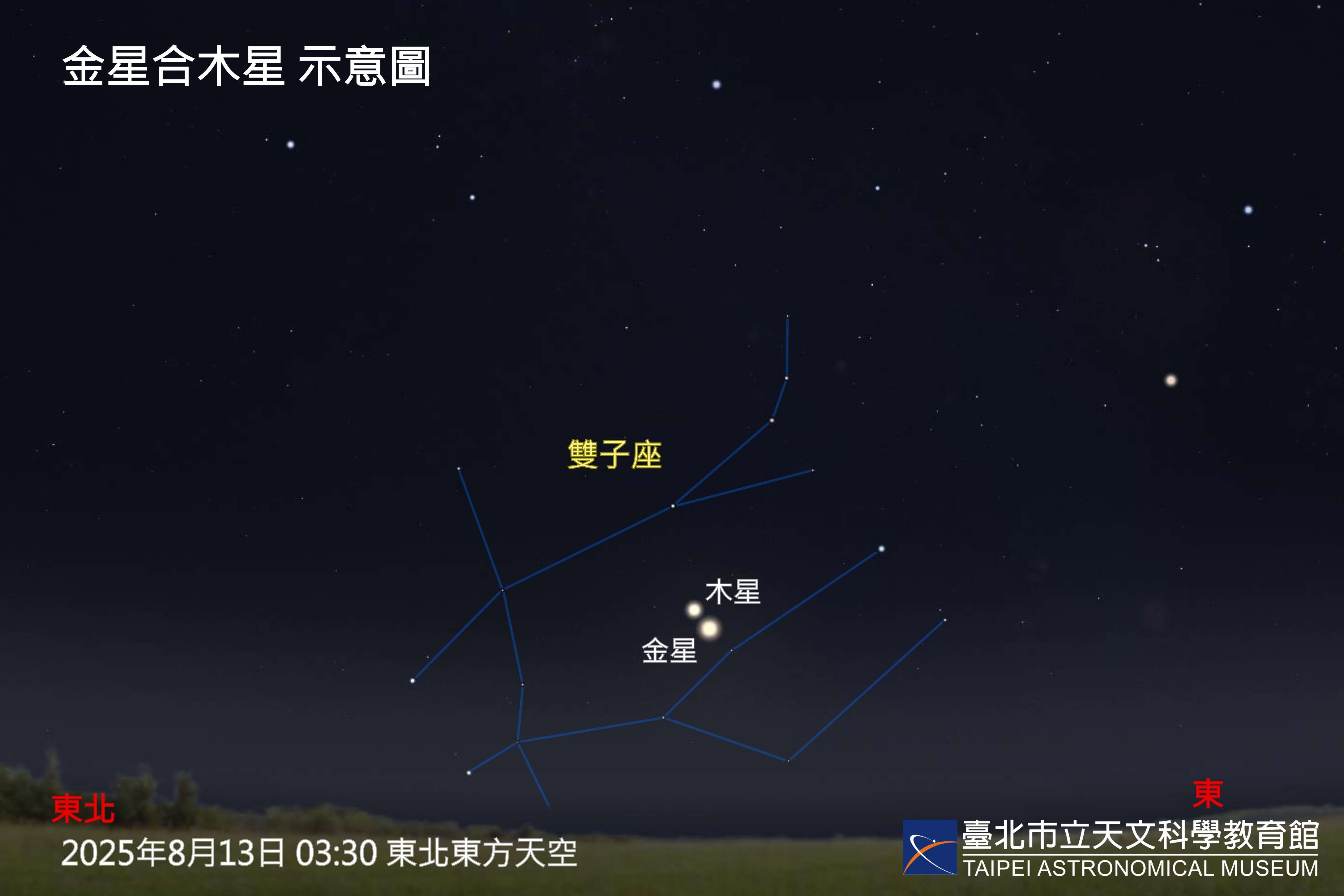 Another fascinating highlight this month is Chi Cygni, a red giant star in the heart of the Summer Triangle. This long-period variable star brightens from an extremely dim magnitude 14.2 to a visible 3.3, with a cycle of about 408 days. In August, it reaches peak brightness, making it an ideal opportunity to spot a variable star with the unaided eye. For more detailed information on these astronomical events, visit the Taipei Astronomical Museum website.
The Perseid meteor shower, one of the year's three major meteor showers, is renowned for its swift meteors and occasional bright fireballs. This year, during its peak on August 12, the zenithal hourly rate (ZHR) is predicted to reach about 100 meteors per hour, with around 60 meteors per hour visible under typical viewing conditions. Despite interference from bright moonlight this year, the occasional bright fireballs are still worth the watch. Taipei Astronomical Museum recommends choosing a location with a wide-open view away from the Moon for optimal naked-eye viewing.
On Wednesday, August 13, around 3:00 a.m., Venus and Jupiter will stage a close conjunction in the eastern sky, separated by just about 1 degree—their closest approach of the year. With Venus shining at magnitude –4.0 and Jupiter at magnitude –1.9, their simultaneous rise before dawn will be a romantic and spectacular scene.Late on Saturday, August 16, the last quarter Moon will pass near the Pleiades star cluster—also known as the "jewel box of the night sky". A pair of binoculars will offer a charming view of the Moon and the cluster's densely packed stars in the same field of view. On Tuesday, August 19, Mercury reaches greatest western elongation, placing it 18.6 degrees away from the Sun. This marks the best time to observe Mercury this season. Just before dawn, you'll be able to spot bright Mercury, and with binoculars, also catch the nearby Praesepe (Beehive Cluster) to its left.
Another fascinating highlight this month is Chi Cygni, a red giant star in the heart of the Summer Triangle. This long-period variable star brightens from an extremely dim magnitude 14.2 to a visible 3.3, with a cycle of about 408 days. In August, it reaches peak brightness, making it an ideal opportunity to spot a variable star with the unaided eye. For more detailed information on these astronomical events, visit the Taipei Astronomical Museum website. 


