 A Dreamy Purple-and-White Carpet: The Brazilian Iris Bursts into Bloom in Shilin District
Post date:2026-05-19
Updates:2026-06-30
526
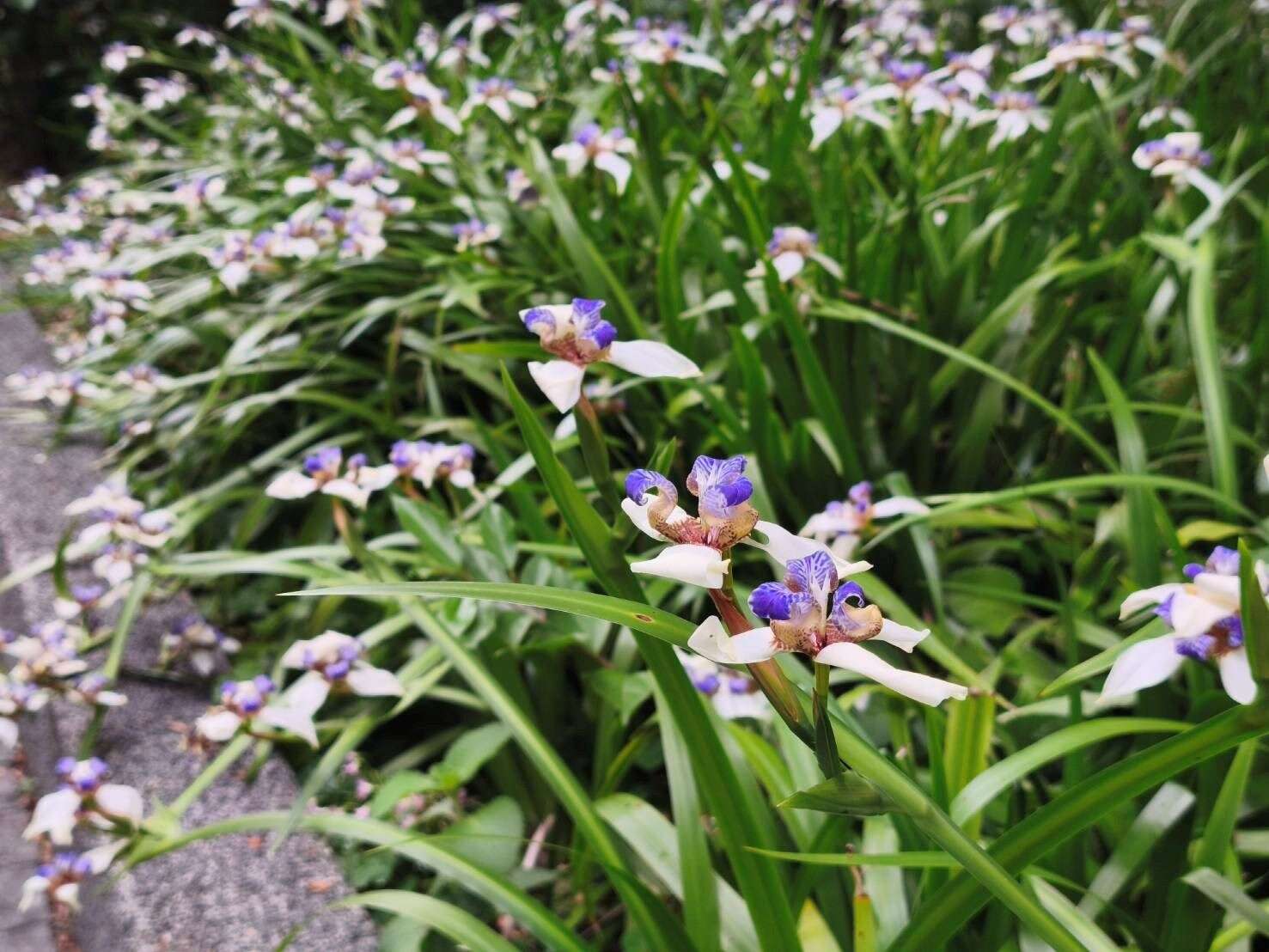
Even as early summer begins, the flower season is not yet over. This May, in several parks and green spaces in Shilin District, large swaths of lush, iris-like plants can still be seen growing along the edges of wooded areas. The flowers in Shilin Lanya (No. 1) Park and Shilin Green No. 206 are currently in peak bloom, inviting visitors to come and enjoy them.
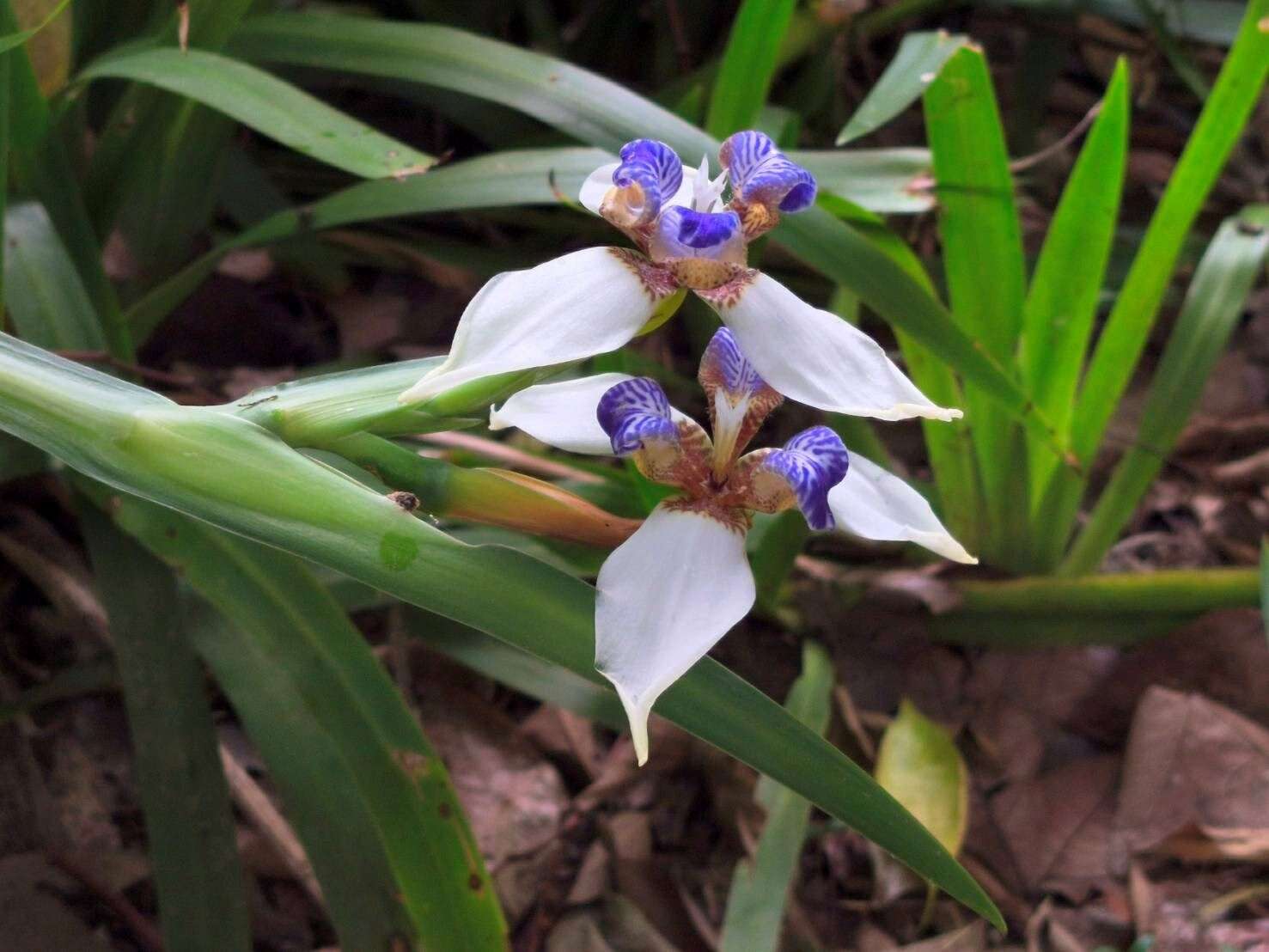
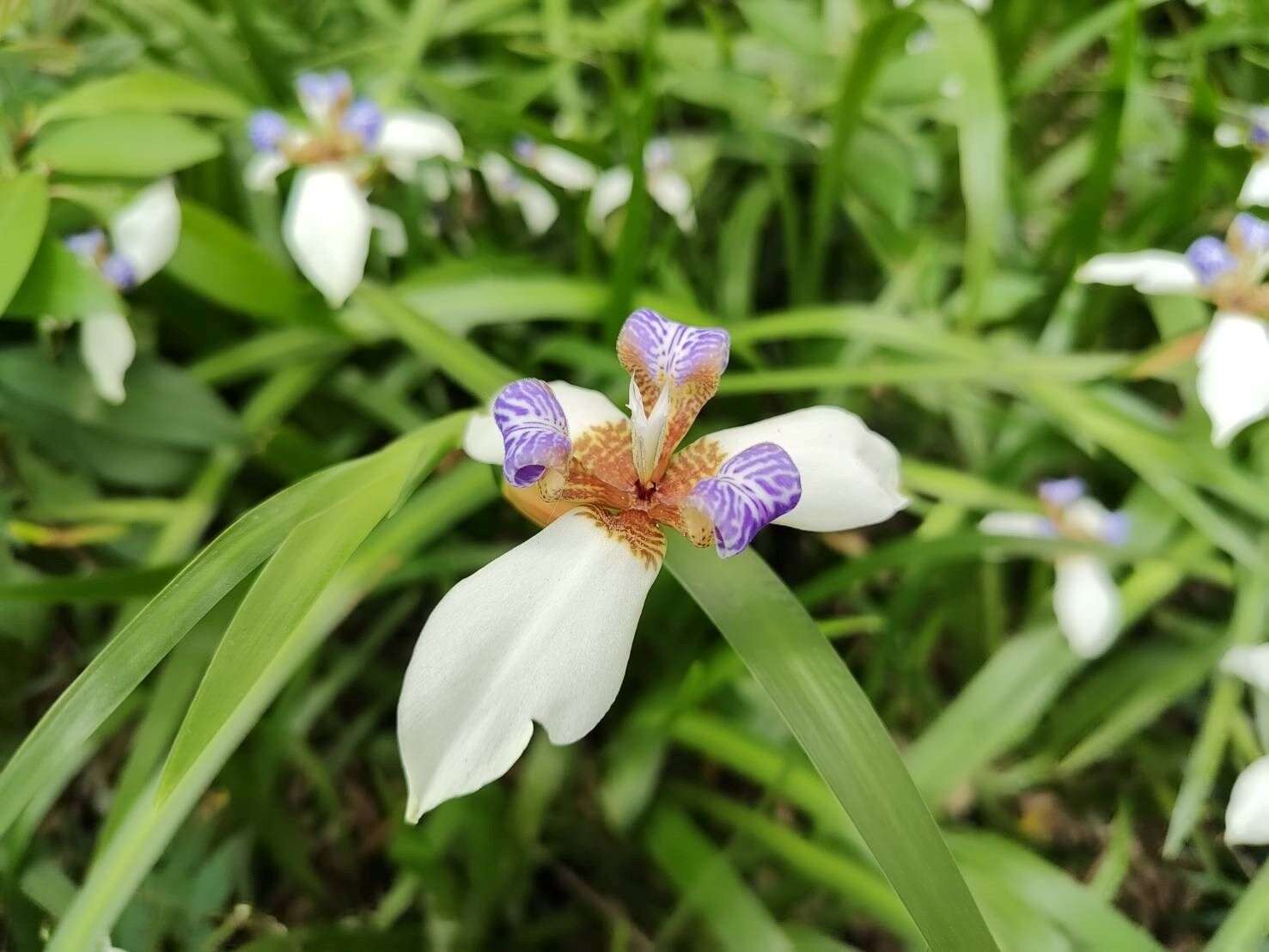
At first glance, the Brazilian iris seems to have six petals. Its three white outer segments spread outward flat and are actually modified bracts, while the three upright, inward-curving inner segments, blue-violet with white stripes, are the true petals. Like most irises, the Brazilian iris grows in fan-shaped clumps of sword-like leaves with rhizomes underground, and it can also be propagated by dividing those rhizomes. What makes the Brazilian iris particularly distinctive is that near the tips of its sword-like leaves, it sends out flat flower stalks that resemble leaves. At the flowering nodes, plantlets develop; as they grow heavier, the leaves bend down and touch the soil, allowing the plantlets to take root and grow into new plants. Because this method of spreading looks as though the plant is walking, the Brazilian iris has the common English name, the “Walking Iris”.
Although each flower lasts for only half a day to a full day, new buds continue to develop throughout May. Visitors may want to take some time to enjoy a walk and the blossoms. If you missed the romantic purple jacarandas in Tianmu earlier this season, be sure not to miss this purple-and-white early-summer scene.
At first glance, the Brazilian iris seems to have six petals. Its three white outer segments spread outward flat and are actually modified bracts, while the three upright, inward-curving inner segments, blue-violet with white stripes, are the true petals. Like most irises, the Brazilian iris grows in fan-shaped clumps of sword-like leaves with rhizomes underground, and it can also be propagated by dividing those rhizomes. What makes the Brazilian iris particularly distinctive is that near the tips of its sword-like leaves, it sends out flat flower stalks that resemble leaves. At the flowering nodes, plantlets develop; as they grow heavier, the leaves bend down and touch the soil, allowing the plantlets to take root and grow into new plants. Because this method of spreading looks as though the plant is walking, the Brazilian iris has the common English name, the “Walking Iris”.
Although each flower lasts for only half a day to a full day, new buds continue to develop throughout May. Visitors may want to take some time to enjoy a walk and the blossoms. If you missed the romantic purple jacarandas in Tianmu earlier this season, be sure not to miss this purple-and-white early-summer scene.


