 Venus Steals the Show in July Night Sky; Twin Meteor Showers Peak at Month's End
Post date:2026-07-08
Updates:2026-07-08
Press bureau:Taipei Astronomical Museum
10
July brings a spectacular lineup of celestial events! According to the Taipei Astronomical Museum, brilliant Venus will be the highlight of the month, shining brightly in the western evening sky throughout July. It will make close encounters with Regulus, the brightest star in Leo, and a slender crescent Moon. In mid-July, the Moon will pass near the Pleiades star cluster, also known as the "Seven Sisters." To conclude the month, both the Southern Delta Aquariid and Alpha Capricornid meteor showers will reach their peak on the same night.
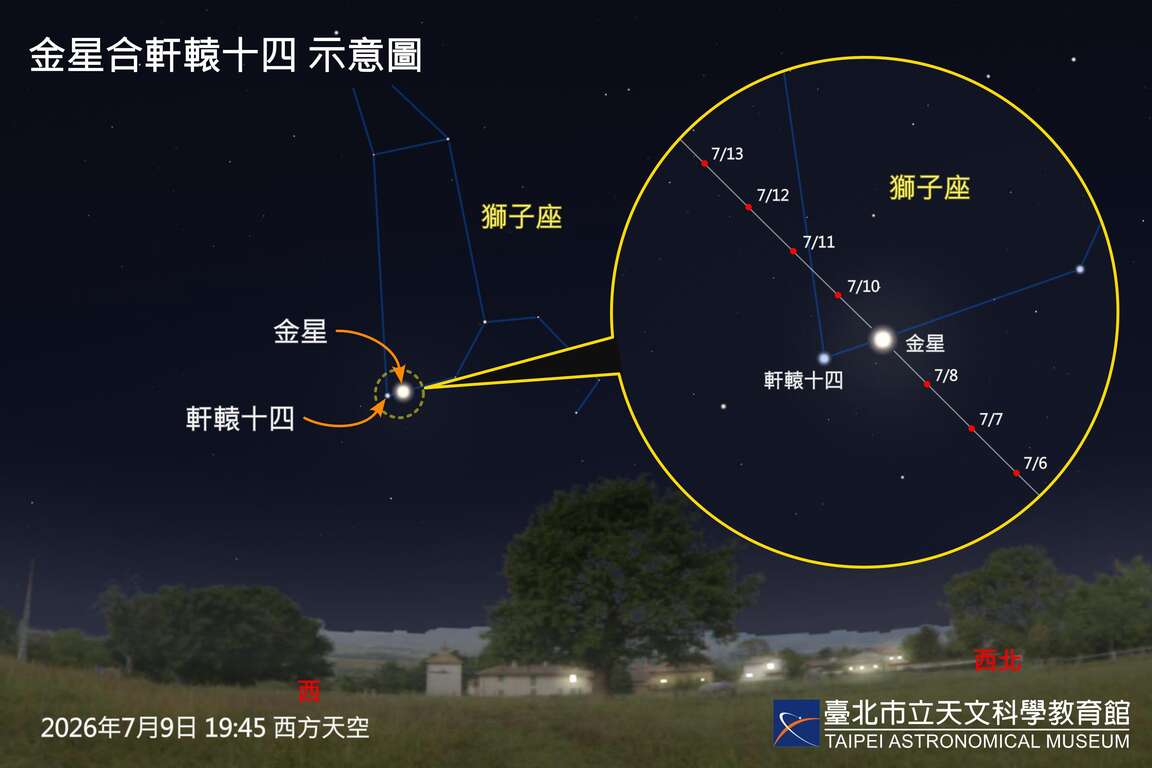
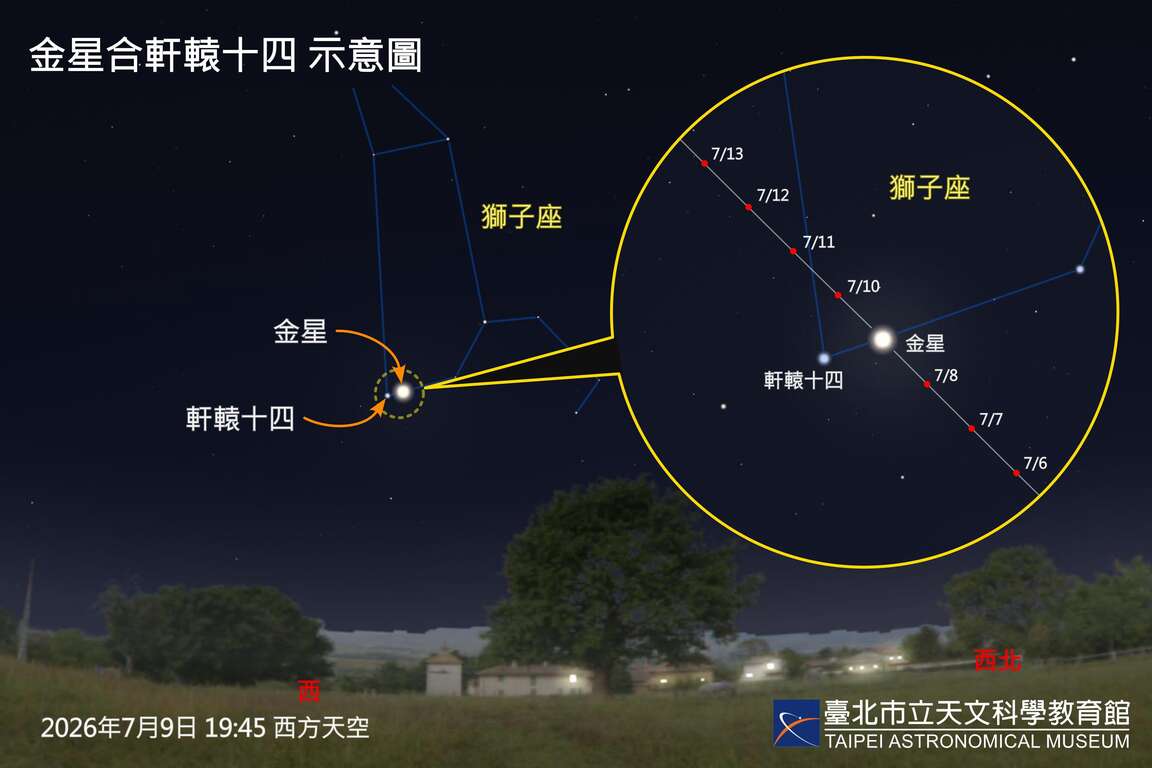
The Museum notes that after sunset each evening in July, Venus—brighter than magnitude -4—will be easily visible high in the western sky. As the brightest object in the night sky after the Sun and the Moon, it remains visible until around 9:00 p.m., making it easy to spot. On July 9, Venus will pass just about 1 degree from Regulus, creating a striking contrast between the golden glow of Venus and the blue-white light of the star.
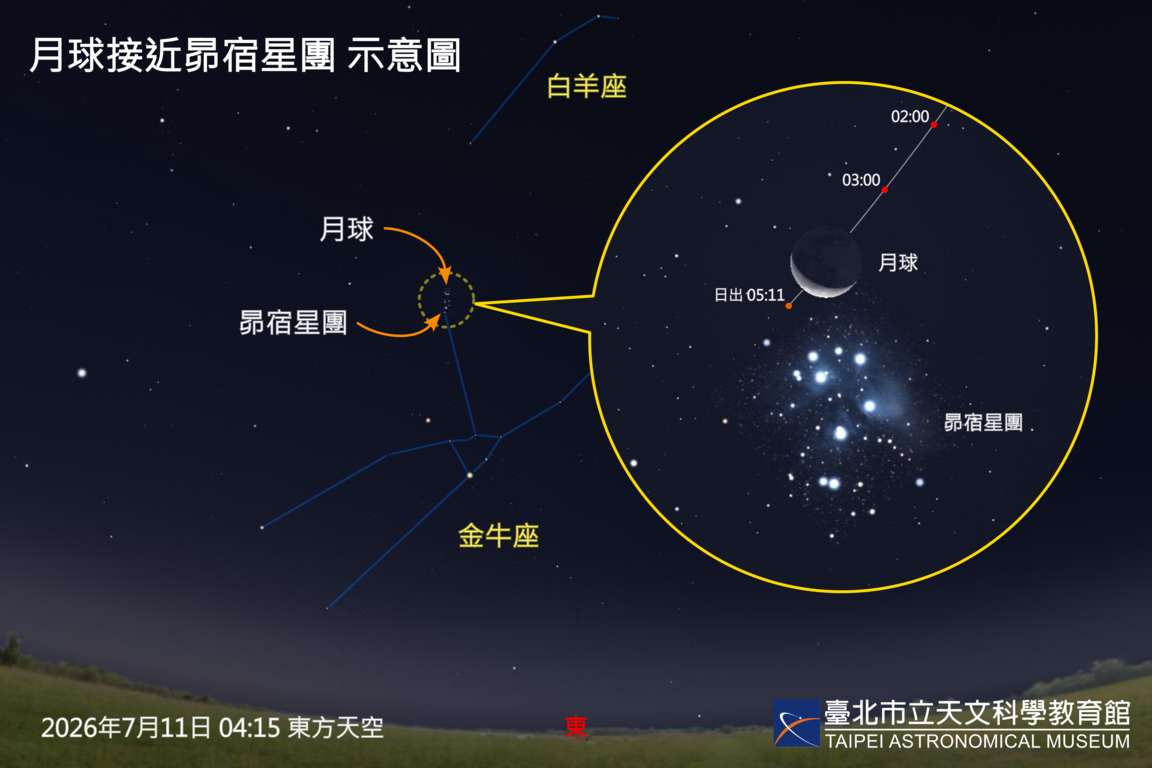
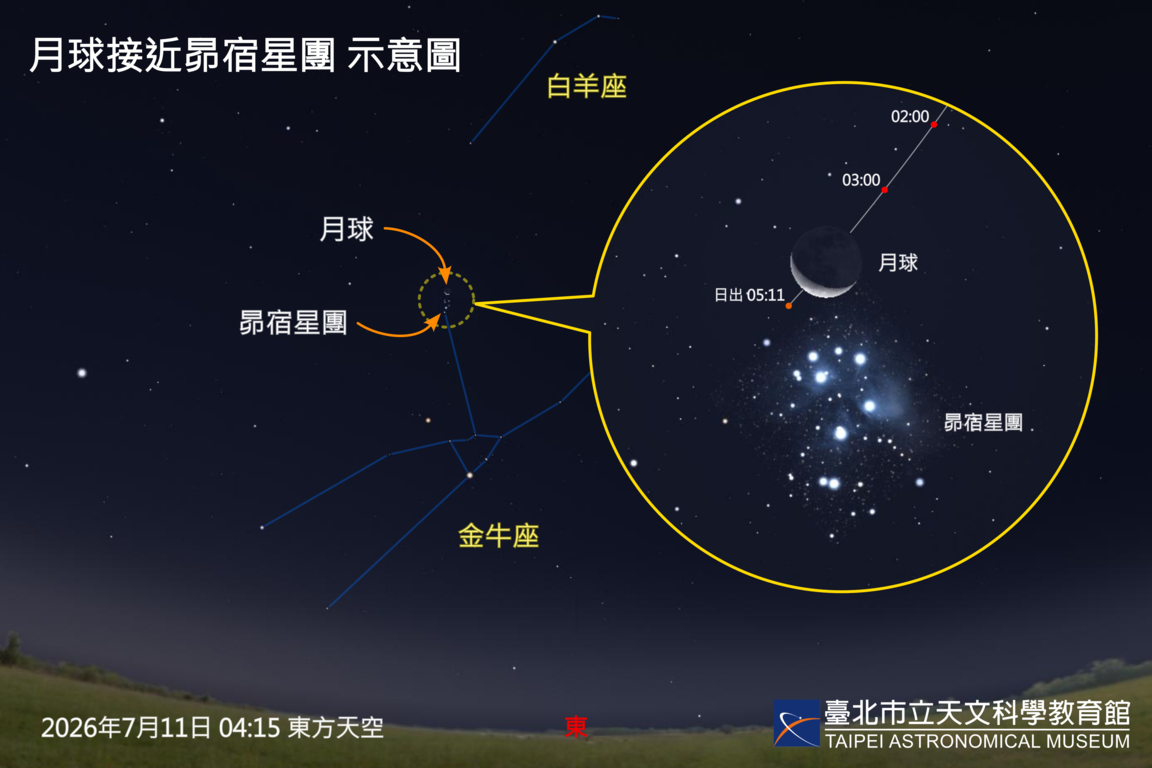
In the early morning of July 11, from around 2:00 a.m. until dawn, the waning Moon will appear close to the Pleiades star cluster. The pairing will be easily visible to the naked eye. Then, on the evening of July 17, Venus and a thin crescent Moon will make a beautiful close approach, creating the charming sight known as a Venus–Moon conjunction, one of the month's most picturesque celestial events.
The grand finale arrives on July 31, when both the Southern Delta Aquariid and Alpha Capricornid meteor showers reach their maximum activity. The Southern Delta Aquariids are expected to produce a Zenithal Hourly Rate (ZHR) of about 25 meteors, with moderately fast meteors, while the Alpha Capricornids are forecast to produce about 5 meteors per hour. After 9:00 p.m., observers are encouraged to find a dark location with an unobstructed view of the sky and avoid the direction of the Moon for the best viewing experience.
For more information about July's celestial events, please visit the Taipei Astronomical Museum website.
The Museum notes that after sunset each evening in July, Venus—brighter than magnitude -4—will be easily visible high in the western sky. As the brightest object in the night sky after the Sun and the Moon, it remains visible until around 9:00 p.m., making it easy to spot. On July 9, Venus will pass just about 1 degree from Regulus, creating a striking contrast between the golden glow of Venus and the blue-white light of the star.
In the early morning of July 11, from around 2:00 a.m. until dawn, the waning Moon will appear close to the Pleiades star cluster. The pairing will be easily visible to the naked eye. Then, on the evening of July 17, Venus and a thin crescent Moon will make a beautiful close approach, creating the charming sight known as a Venus–Moon conjunction, one of the month's most picturesque celestial events.
The grand finale arrives on July 31, when both the Southern Delta Aquariid and Alpha Capricornid meteor showers reach their maximum activity. The Southern Delta Aquariids are expected to produce a Zenithal Hourly Rate (ZHR) of about 25 meteors, with moderately fast meteors, while the Alpha Capricornids are forecast to produce about 5 meteors per hour. After 9:00 p.m., observers are encouraged to find a dark location with an unobstructed view of the sky and avoid the direction of the Moon for the best viewing experience.
For more information about July's celestial events, please visit the Taipei Astronomical Museum website.
Gallery
:::
Recent News
More-

2026 Taiwan Culinary Exhibition: Flavors—Drawn from the Land: From Bib Gourmand to Local Delicacies
7 -
Don't Chase! Your ''Kindness'' Could Be Fatal: Young Muntjacs Wander into Taipei City
60 -
Venus Steals the Show in July Night Sky; Twin Meteor Showers Peak at Month's End
10 -
Eight Riverside Graffiti Walls Reopen Across Taipei
54


